This guide explains how to use an Ageism Questionnaire to assess workplace age-based bias, improve policies, and strengthen inclusive culture. Background research outlines what ageism is, why measurement matters, and what ethical safeguards protect respondents. It then walks through practical steps, interpretation approaches, and decision rules for HR and managers, including common FAQs.
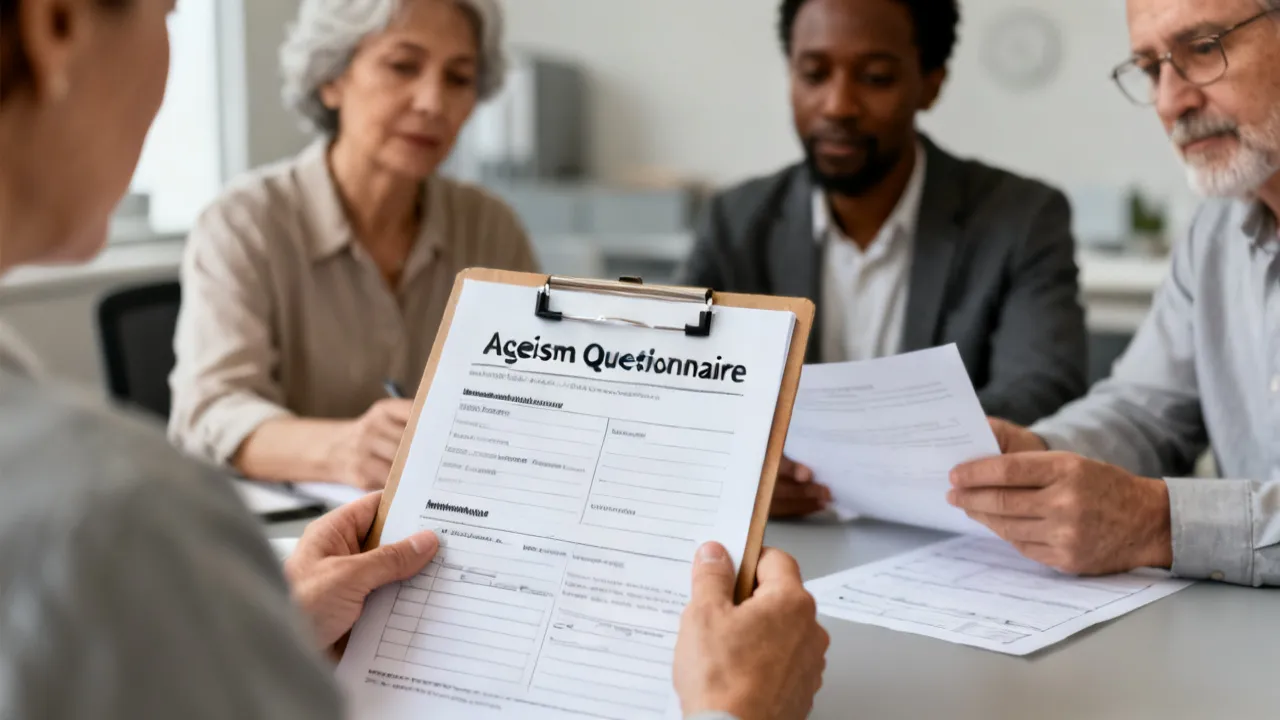
An Ageism Questionnaire helps organizations identify subtle or systemic age-based bias in everyday interactions, policies, and communication. Used well, it supports fairer hiring, onboarding, performance evaluation, training design, and complaint handling—without reducing people to stereotypes. The result is not only better workplace conduct, but also clearer organizational learning about where exclusionary patterns may be emerging.
From an industry expert perspective, the key is to treat the questionnaire as an instrument for diagnosis, not a courtroom. The goal is to understand experience, frequency, and context—then translate findings into practical controls, manager coaching, process changes, and continuous monitoring. Done responsibly, an Ageism Questionnaire can help organizations move from “we believe we are inclusive” to “we can demonstrate where inclusion is working and where it is not.”
Inclusion is often discussed as a value; measurement turns it into a managed system. When ageism is treated as measurable, organizations gain a way to catch issues earlier—before they become turnover, legal exposure, reputational damage, or persistent disengagement among employees.
There is also a psychological dimension: many forms of bias are easier to detect through lived experience than through top-down instruction. Employees may not want to file a formal complaint, may fear retaliation, or may simply not have the language to describe what happened to them. A carefully designed questionnaire creates a structured channel that can reveal themes that otherwise remain hidden.
Finally, modern workplaces are multi-generational by default. People may work for 30, 40, or even 50 years across multiple “life stages,” tech cycles, and organizational restructurings. Ageism is therefore not a niche concern—it intersects with training systems, job design, mentorship culture, leadership pathways, health accommodation, remote work practices, and the evolving expectations of what “professional” means.
Ageism generally refers to prejudice or discrimination based on a person’s age, including assumptions about capability, adaptability, attendance, health, or “cultural fit.” In the workplace, it often shows up in three recurring areas:
An Ageism Questionnaire converts these lived experiences into structured data. When designed with careful wording, clear response scales, and confidential administration, it can reveal patterns that are not obvious in interviews or annual culture surveys alone.
Importantly, the measurement approach should align with widely recognized human rights and employment standards. In many jurisdictions, discrimination on the basis of age is regulated under employment and equality laws, and organizations are expected to maintain fair selection and treatment practices. Beyond legal compliance, measurement supports operational fairness by establishing consistent expectations and reducing “tribal” decision-making by informal managers.
Ageism is also measurable because many discriminatory experiences can be operationalized as observable workplace events. For example, if an employee reports that they were repeatedly excluded from high-visibility training or were offered fewer opportunities to lead cross-functional initiatives, that experience can be compared across teams, time periods, and managerial cohorts. The questionnaire does not need to prove intent; it needs to detect differential experience.
There is a further reason measurement matters: age-related stereotypes can be both negative and “benevolent” (for instance, “you’re too seasoned to learn that system quickly” or “we’ll protect you from stressful projects”). Even “helpful” language can limit opportunity and signal reduced trust. A mature Ageism Questionnaire should therefore include items that detect not only overt hostility but also exclusion disguised as support.
Organizations increasingly view inclusion as both an ethical commitment and an operational necessity. While outcomes vary by sector and geography, research in organizational psychology and workplace well-being consistently links respectful, inclusive environments with lower friction, improved engagement, and stronger retention signals. For ageism specifically, measurement helps reduce uncertainty by identifying where managers and teams need practical support.
To keep claims evidence-based, it helps to anchor performance expectations to established sources. For example:
These references support the rationale for systematic assessment and remedial action—without relying on speculative or exaggerated figures.
From a business risk perspective, age-based bias creates multiple categories of exposure:
A questionnaire helps mitigate these risks by making the invisible visible. Instead of waiting for outcomes to worsen (e.g., attrition spikes), organizations can identify where experiences become less fair, then intervene early.
There is also a performance argument that often resonates with executives: inclusive environments tend to produce more stable team performance because people can contribute without fear of disrespect. Ageism can be a silent source of “workplace drag,” including reduced willingness to suggest ideas, fewer volunteers for stretch assignments, and lower engagement in mentorship or knowledge-sharing. Identifying age bias can therefore improve productivity indirectly.
From a professional HR analytics and organizational development standpoint, the top Ageism Questionnaire programs share four characteristics:
In practice, you also need to consider survey literacy, language accessibility, and whether the organization’s culture supports speaking up. A questionnaire cannot replace due process for individual complaints, but it can inform where systems are failing.
To operationalize “responsibility,” expert teams also define the analytic boundaries. For example, if a questionnaire is designed to detect patterns of perceived bias, it should not be used to label individual employees as biased. Similarly, the survey should not be used to justify irreversible employment decisions (like termination) without a separate, documented investigation process.
Another responsibility consideration is survey timing. A survey conducted during a restructuring, layoff cycle, or major leadership transition may raise stress levels and suppress candid feedback. Experts therefore plan communications and often schedule a “cool-down” period before launch, or they include reassurance language about how data will be handled regardless of organizational change.
Measurement validity matters as well. If questions are too vague, respondents cannot answer accurately; if they are too leading or emotionally loaded, they may distort responses. Responsible design balances sensitivity with neutrality by focusing on experiences (“I was not included in…”) rather than judgments (“management is unfair”).
Finally, responsible administration includes closing the loop. If employees believe nothing changes, participation drops in future cycles and credibility declines. Expert programs plan follow-up communications as part of the original project scope.
A strong Ageism Questionnaire typically covers dimensions such as:
Wording matters. For example, “I was ignored because of my age” is sharper but may feel sensitive. An alternative is “I experienced fewer opportunities to contribute compared to colleagues in similar roles.” The top forms balance sensitivity with respondent comfort.
To improve practical usefulness, the questionnaire can also separate “perceived bias” from “perceived process unfairness.” An employee might interpret unequal outcomes as “bias,” even when process design differs for valid reasons. If the survey captures the mechanism (e.g., access to training nominations, subjective performance calibration meetings, or inconsistent scheduling), analysts can propose targeted interventions.
Consider adding items that detect common age-related workplace patterns:
Not every organization needs every dimension. The goal is to capture enough coverage to make results actionable without overwhelming respondents. A well-balanced questionnaire often includes a mix of core items (for consistency across cycles) and optional modules (for emerging initiatives like remote work or new performance systems).
Very questionnaires rely on Likert-style scales (e.g., “Never” to “Always,” or “Strongly disagree” to “Strongly agree”). An expert interpretation avoids overconfidence. Instead of treating a single score as a definitive “proof,” organizations should use patterns across items, teams, and time.
Consider a practical approach:
In other words, the Ageism Questionnaire is a diagnostic lens. It supports prioritization: where to intervene first, what type of intervention to choose, and how to measure improvement over time.
To make interpretation more robust, expert programs often incorporate additional mechanisms:
Interpretation should also address the difference between “low frequency” and “high impact.” Some experiences may be rare but intense; others may be frequent but less severe. A useful analytic framework can capture both dimensions—such as using frequency as a proxy for exposure and selecting items that hint at impact (e.g., willingness to speak up, sense of belonging, perceived fairness of evaluations).
Finally, interpretation must be communicated responsibly. Employees should not receive conclusions that overreach beyond the data. Instead, organizations should communicate what themes were observed, what actions will follow, and how success will be measured. This approach preserves credibility and supports psychological safety.
Any organizational assessment related to bias should be designed to minimize potential negative impacts. Key safeguards include:
These practices align with mainstream principles in organizational ethics and privacy management. They also help ensure the questionnaire supports trust rather than fear.
There are additional ethical considerations that many organizations overlook:
A common ethical question is whether respondents should be asked to provide their age. In most cases, age-specific analysis can be done indirectly (e.g., using tenure bands, age ranges with consent, or anonymized segmentation) to reduce privacy risk. If age is collected, it should be voluntary, clearly explained, and handled under strict privacy controls.
Another ethical challenge is the possibility that employees might answer out of frustration about unrelated workplace issues (e.g., manager conflict) and attribute them to age. A responsible questionnaire includes items that help validate whether the perceived bias is truly age-based—such as asking whether they observed differences specifically linked to age-related assumptions.
Ethics also includes how actions are taken. If a questionnaire indicates problems in one area, organizations should not implement superficial training alone. Ethical action includes structural changes (e.g., revision of evaluation rubrics, training nomination processes, or scheduling fairness protocols).
Because workplaces communicate differently across regions, the Ageism Questionnaire should be adapted for tone and cultural expectations. For example:
Where local landmarks or everyday workplace references help comprehension, use them only as examples in training materials—not in the core items—so the measurement remains comparable and interpretable.
Localization also involves understanding local labor practices. For instance, in some regions scheduling practices differ by union rules or local customs, which may affect perceptions of fairness. Expert teams therefore pair questionnaire data with process audits to avoid misattribution.
Another nuance is the cultural meaning of respect. In some settings, “respect” might be interpreted through formal titles and deference; in others it might be seen as responsiveness and direct inclusion. Ageism Questionnaire items that reference “respect” should be framed so that they refer to specific behaviors rather than abstract norms.
Finally, expert localization includes piloting with small groups in each region to test comprehension. Back-translation and semantic equivalence checks help ensure that the scale measures the same underlying construct.
| Use Case | Goal | Recommended Administration | Data & Confidentiality Conditions | Typical Requirements |
|---|---|---|---|---|
| Workplace baseline assessment | Establish where age-based concerns may exist | Organization-wide, anonymized, timed with a communications plan | Aggregation to protect identities; limited reporting granularity | HR sponsorship, respondent guidance, and documented data retention policy |
| Post-training evaluation | Check whether interventions reduced perceived bias | Follow-up survey using comparable items | Track results over time; maintain consistent item wording | Pre/post schedule, training attendance linkage (where permitted) |
| Team-level diagnostics | Identify which dimensions are very problematic within a department | Team reporting only when sample size supports anonymity | Minimum group size thresholds; suppressed reporting for small teams | Department leader commitment to action planning; coaching resources |
| Policy and process review | Detect whether evaluation, hiring, or training processes feel age-skewed | Supplement questionnaire with policy audits | Ensure survey results do not become sole evidence in individual cases | Cross-functional review (HR, legal, operations) |
| Employee experience improvement cycle | Support continuous improvement and culture change | Quarterly or semiannual pulse checks | Consistent anonymity controls; standardized analysis methods | Action tracking dashboard; governance for follow-up |
Below is a practical, step-by-step sequence that many HR analytics and organizational change teams use. Adjust the depth based on headcount, sector, and governance maturity.
In this step, also define what you will not do. For example, do not promise that every negative response will result in immediate intervention against a named individual. Instead, promise action against patterns—because that is the credible scope of a survey instrument.
When selecting items, experts consider construct validity: are the items truly measuring “age-based bias experiences” rather than general dissatisfaction? A common approach is to include parallel items that detect general inclusion and compare them with age-specific items. If general inclusion is stable but age-specific items decline, the issue likely relates to age dynamics rather than broad culture failure.
Communication is not only about launch messaging; it is about expectations. Employees should know how long the questionnaire will take, what the response deadline is, how confidentiality works, and when they will receive follow-up updates. If the organization plans to share aggregated results at the team or site level, it should define what aggregation thresholds will be used.
Engagement design also includes survey length. Many organizations overbuild surveys and inadvertently reduce completion rates. An expert team uses a “minimum viable” approach: core items that represent the main dimensions, plus one or two optional sections for context. If you need to add modules, consider rotating them across cycles to reduce fatigue.
Another engagement strategy is to align administration with psychological safety. If employees fear consequences, response rates may drop or responses may become uniformly extreme. Pre-survey messaging and consistent confidentiality commitments can reduce that fear.
Fairness checks include verifying that the survey is not inadvertently biased. For example, if certain language versions have systematically lower scores, analysts should investigate translation quality. If certain role groups rarely have an opportunity to participate in training, survey results must be interpreted alongside process design (training might not be relevant to that role rather than unfair).
Experts also examine response distributions to detect survey anomalies, such as sudden shifts after a major event, or improbable patterns suggesting automated or careless responses.
Intervention design should be connected to the mechanism behind the survey results. If employees report that they are excluded from leadership exposure, interventions might include revising assignment processes for acting roles and increasing structured visibility opportunities. If employees report disrespect in meetings, interventions might include manager training on inclusive facilitation and clear team norms for interruptions and decision-making.
Importantly, interventions should be measurable. For each planned action, define a measurable outcome (e.g., increased equity of training nominations, adoption of revised performance calibration rubrics, improved employee perceptions on specific items in follow-up cycles).
Also consider the “change management” component. Even well-designed interventions fail without manager buy-in and accountability. Experts therefore provide managers with coaching and implementation tools rather than simply distributing a survey report.
Monitoring should include both survey outcomes and leading indicators. For example, if training access equity is a priority, track nomination ratios by age proxy metrics where lawful and appropriate, such as tenure bands or job families. If health accommodation and respectful communication are priorities, track the time-to-response for accommodations requests and employee perceptions on the accommodation process.
Finally, iteration means learning. Some items may not perform as expected. An expert program reviews item performance after each cycle—without changing core items unnecessarily, so trend analysis remains valid.
Many organizations choose between internal survey tooling and external vendors. If you engage a supplier, procurement typically focuses on data handling, survey infrastructure, analytics capabilities, and reporting governance.
Price information: Pricing varies widely depending on scope, number of users, response volume, analytics depth, and support model (template-only vs. end-to-end program design). To avoid unreliable estimates, treat quotes as case-specific and request itemized proposals that clarify deliverables such as piloting, translations, dashboard reporting, and follow-up recommendations.
Supplier details: When evaluating suppliers, ask for documented security practices, role-based access controls, data retention terms, and a clear approach to anonymity and aggregation thresholds. You should also request transparency on how item sets are reviewed for clarity and cultural fit.
Location considerations: If your workforce spans regions with different labor rules, the supplier should support region-appropriate governance. In multinational organizations, you may need local language versions and consistent reporting logic to avoid biased comparisons. If you operate in “nearby” locations, align processes so that results are comparable while respecting local HR frameworks.
From a budgeting perspective, it is helpful to think of the total program cost rather than only the survey license. The cost of design, piloting, translation, change management, manager coaching, and follow-up communications can significantly exceed tooling costs. Many organizations underinvest in follow-through—then experience low credibility in future cycles.
Some organizations also budget for qualitative follow-up. For example, they might conduct targeted focus groups with employees (with careful confidentiality) to understand why certain items scored poorly. While this introduces additional cost and requires ethical moderation, it often improves intervention effectiveness.
Even a well-designed Ageism Questionnaire can fail if basic conditions are missing. The very common requirements include:
One additional condition is “organizational capacity to act.” A questionnaire creates obligations in practice. If the organization cannot deliver on follow-up actions, then employee trust can be damaged. Experts recommend running a limited pilot first when organizational readiness is uncertain—so the organization learns how to act on results before scaling.
Another condition is “psychological safety.” If employees believe that speaking up is punished, response quality will deteriorate and the organization will not get accurate diagnostic insight. A safe environment is created by how leadership responds to earlier reports of bias—whether through credible action or dismissive rhetoric.
Repeatability also requires discipline. Changing core items frequently makes trend analysis unreliable. Experts often freeze a core set of items for at least 2–3 cycles and only adjust optional modules.
An Ageism Questionnaire is a structured employee survey designed to capture perceptions and experiences related to age-based bias at work. It typically measures behaviors and fairness in communication, opportunities, performance evaluation, and development access.
Unlike broad culture instruments, an Ageism Questionnaire focuses on age-related assumptions and differential treatment. It uses targeted items to detect patterns that may be hidden within general engagement or inclusion questions.
In well-designed programs, it should not. Items are framed around experiences and observations, and reporting is aggregated to protect anonymity. Individual allegations typically follow established HR or complaint processes.
Good practice includes clear item wording, neutral scale design, pilot testing, and data quality checks. Analysis should focus on themes and patterns rather than single outlier responses.
HR should translate top themes into actionable interventions—such as manager coaching, revising evaluation rubrics, improving training access, and strengthening complaint pathways—then communicate progress and measure impact with follow-up surveys.
Yes, but only with careful translation and back-translation or equivalent quality assurance to preserve item meaning. Cultural nuance in interpretation should be considered during piloting.
Many organizations start with a baseline, then run follow-ups after targeted initiatives (e.g., post-training). For ongoing monitoring, pulse cycles (quarterly or semiannual) can be used if survey fatigue is managed and analytics supports repeatability.
Requirements generally include informed consent, anonymization through aggregation, minimum group thresholds for reporting, secure storage, controlled access, and a documented data retention policy.
Frameworks from bodies such as the ILO on non-discrimination and decent work, and employment guidance from regulators such as the EEOC (where applicable) support organizations in maintaining fair treatment and monitoring workplace conditions. These sources do not replace internal expertise, but they help justify systematic assessment and remediation.
Not always. Collecting age can increase privacy concerns and may require additional legal basis depending on jurisdiction. Many organizations use proxy segmentation such as tenure bands or opt-in age ranges with strict confidentiality. If you do collect age, design the consent process carefully and ensure data use is limited to what is necessary for analysis.
Use a structured response. First, validate data quality and sample size to ensure the pattern is meaningful. Next, conduct process review (training nomination, performance calibration, meeting norms, scheduling practices). Then implement targeted interventions with local ownership. Communicate timelines and progress to maintain trust.
It can inform hiring and onboarding improvements, but it should not be used as a gate for individual employment decisions. Instead, use the findings to refine selection rubrics, interview training, onboarding buddy systems, and early feedback mechanisms. Consider a separate onboarding pulse survey focused on inclusion and respect during the first 30–90 days.
Use a core item set repeated each cycle and rotate optional modules. Keep pulse surveys short, and integrate them with other planned employee experience check-ins where feasible. Provide clear communication about how the survey affects action, which often improves response willingness.
Language can influence interpretation. Expert programs pilot items to confirm clarity and may include examples in training materials rather than in core items. You can also include a short comprehension prompt or optional context question. Over time, item performance metrics can guide refinements.
Typically, results are best used as evidence of organizational patterns rather than individual wrongdoing. If allegations are reported in open-text responses or through other channels, follow due process. Use the questionnaire to identify what systems may need investigation (e.g., performance calibration practices), not to accuse individuals without separate investigative steps.
Note: Specific recommendations and legal obligations vary by jurisdiction; consult qualified legal counsel and relevant local policy guidance when implementing an assessment program.
An Ageism Questionnaire is very valuable when it leads to concrete, monitored improvements. When organizations build the instrument carefully, administer it ethically, and commit to action based on themes—not blame—they can strengthen fairness across hiring, development, evaluation, and day-to-day collaboration.
Ultimately, the questionnaire becomes a practical mechanism for learning: helping leaders understand where age-based bias may affect opportunity and respect, then enabling targeted interventions that support an inclusive workplace for people of all ages.
To ensure real impact, the questionnaire must be treated as part of a broader inclusion operating model: policy review, manager capability building, transparent follow-up, and continuous monitoring. When those elements align, the questionnaire does more than measure perceptions—it improves the system that shapes daily employee experience.
In the modern inclusion landscape, organizations do not succeed only by having values. They succeed by building feedback loops that detect inequity early and address it systematically. An Ageism Questionnaire is one of the most direct ways to create that loop for age-based inclusion, turning intangible concerns into measurable, actionable change.
Striking the Perfect Balance: Navigating Premiums and Out-of-Pocket Expenses in Senior Insurance Plans

Explore the Tranquil Bliss of Idyllic Rural Retreats

How to Make Lasting Memories at Disneyland Attractions

Affordable Phones and Plans for Seniors

Affordable Full Mouth Dental Implants Near You

Unlock the Top Kept Secrets to Finding Your Ideal Dentist for Flawless Dental Implant Results!

Discovering Springdale Estates

Unveiling RS Sul Telecom Services

The Guide to Car Trading

Using an Ageism Questionnaire for Fair Workplace Inclusion
This guide explains how to use an Ageism Questionnaire to assess workplace age-based bias, improve policies, and strengthen inclusive culture. Background research outlines what ageism is, why measurement matters, and what ethical safeguards protect respondents. It then walks through practical steps, interpretation approaches, and decision rules for HR and managers, including common FAQs.
